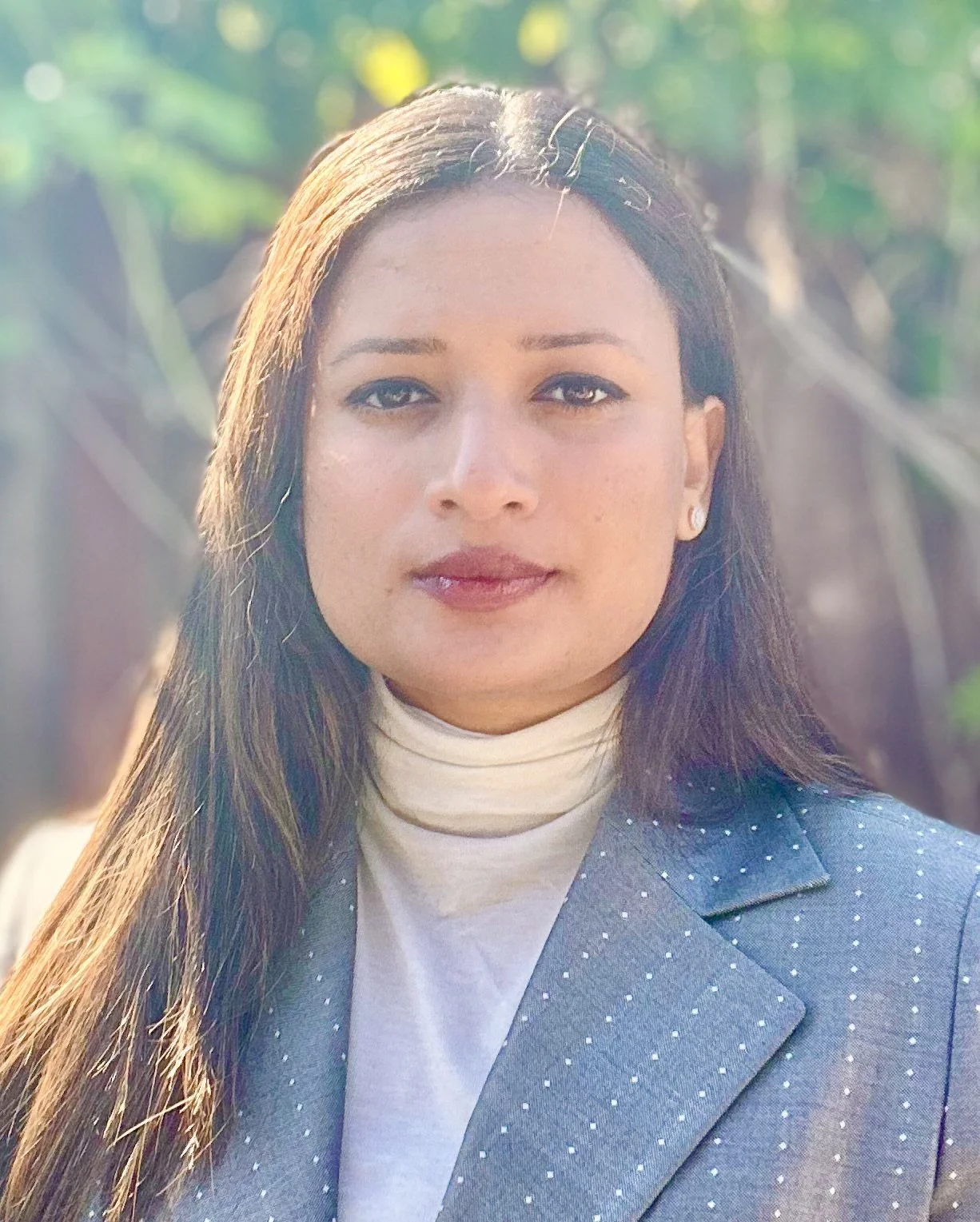
Shaunna Rodrigues
Lecturer, Core Curriculum in Contemporary Civilization, Columbia University.
I am a political theorist and comparative political scientist who studies how shifting political orders justify the forms of knowledge and standards of progress through which they govern. I do this by studying the transition from empire to postcolonial democracies, and postcolonial democracies to democracies mediated by algorithmic governance. My research asks if democratic reconstruction after empire matters as governments across the globe adopt algorithmic governance. My teaching explores the connections between the history of global political thought, public law, and the use of technology in governance.
My first book project, Justification After Empire: Democratic Reconstruction in India, examines how the transition from the plural jurisdictions of empire to constitutional democracy in India transformed how political knowledge of India was categorized and classified. It traces rival efforts to reconstruct these categories across anticolonial thought, constitutionalism, and majoritarian nationalism, and assesses the impact of this rivalry on postcolonial democracy’s turn to algorithmic governance. Funding for this research was secured from the Andrew W. Mellon Foundation and the Institute for Religion, Culture, and Public Life.
My second book project extends this inquiry more deeply into algorithmic governance. It asks what happens to democratic legitimacy when the processes through which citizens become politically intelligible to states and each other are increasingly embedded in digital identity systems, data infrastructures, and computational supply chains.
At Columbia, I teach Contemporary Civilization, the Core Curriculum’s nine-month long seminar in the history of political thought. I have also designed and taught courses on anticolonialism, constitutionalism, democracy, and global political thought.
Research areas: Political Theory, South Asia, Postcolonial Constitutionalism, Public Law, Political Classification, Global Politics, Technology & Politics, Digital Sovereignty and Data Flows